
The Matrix Revolutions
The last part of the first trilogy, the Matrix Revolutions (2003), escalates the conflict between the humans and machines, as well as increases the emotional and philosophical antecedents. Directed by Keanu Reeves, Laurence Fishburne and Carrie-Anne Moss, the movie brings the struggle out of the individual fight. Directed by Lana and Lilly Wachowski, it makes great emphasis on sacrifice, thinly-veiled hope and hard-to-choose decisions, and the new viewers take interest in the movie with renewed interest with websites such as Filmyfly.
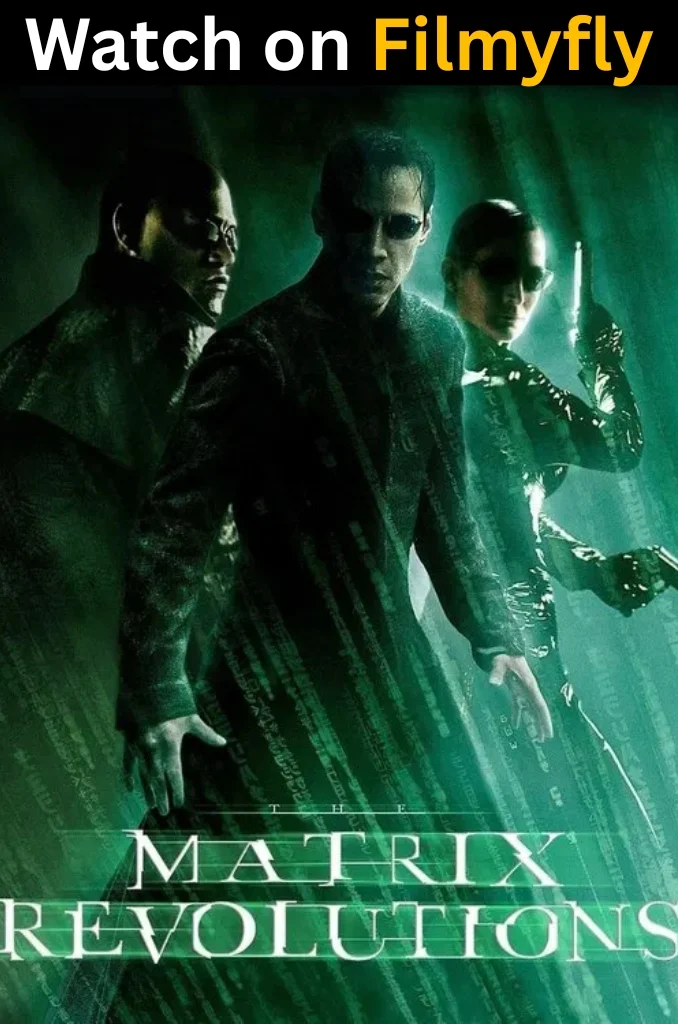
Being the final part of the trilogy, the movie had to have a duty of completing the vast concepts presented before. The film, having Hugo Weaving with his role as Agent Smith and Jada Pinkett Smith as Niobe, also develops the issue of the complexity of resistance. The Matrix Revolutions does not only focus on bringing an action-packed saga to an end, but it also seeks to provide a sense of emotional closure to Neo, Trinity and the Zion people as they are attacked by the all-powerful enemy.
Story Overview
The movie Matrix Revolutions picks right where the leave off of the last movie, Reloaded, and Neo is stuck between two realms and Agent Smith is becoming more and more dangerous. The plot of the movie is split into three simultaneous conflicts: the last fight of Zion, the last-gasp attempt of restoring the bond with Neo and the unavoidable confrontation of Neo and Smith. These plots are fast and they form a sense of urgency because the human race is being exterminated. Both threads add to the effect of increased tension in the film.
The beginning of the conflict is the period when the machines start their invasion of Zion. Laurance Fishburne as Morpheus changes the prophecy-based nurturing mode to survival mode and Niobe, played by Jada Pinkett Smith, heads operations of vital importance. The movie has scrupulously followed the balance between the scenes of the war on a grand scale and the inner life of Neo, making both emotional and physical investments clear. This mixture of impressions makes the story seem multiple and whole.
Cast & Performances
Keanu Reeves is more grounded and reflective when he takes up the Neo role, as this is an actor who realizes well what can be lost to save the greater good. His encounters with Carrie-Anne Moss bring in new emotional features particularly when their relationship is put to its ultimate test. In the meantime, it is the one who is being directed by no one except his vulnerability and determination, Morpheus, played by Laurence Fishburne.
One of the most memorable performances by Hugo Weaving is his role as Agent Smith, who has been turned into an ego and has gone on to be full of ambition. He is there to add intensity to the film particularly when confronting Neo in the last battle. The supporting roles of Mary Alice, Collin Chou and Harold Perrineau also add to the narrative with their minor yet significant details to the world. The combination of the cast makes the story interesting and active.
Visuals & Action
The Matrix Revolutions highlights some of the most ambitious visual effects of the trilogy, making the battle of Zion a reality involving elaborate effects. The mechanical exercises, the Sentinels storming through the tunnels, and huge armored suits develop the feeling of the great danger. The practical and digital effects blend together in an aesthetically harmonious manner, in these scenes as the defenders and the sheer power of the machine army is brought to the forefront.
The final fight between Neo and Agent Smith is iconic and it still takes place in a broken city in the rain. Great dramatic tension is presented in every hit where the two characters battle not only physically but symbolically. The cinematography is bold in the film to show the magnitude of the conflict, and the action choreography is kept in line with the franchise. The visuals have a permanent effect even twenty years later.
Themes & Tone
The elements of destiny, sacrifice, and balance are at the center of the film and influence the choices of all the characters. The journey of Neo turns into a symbolic one, because it touches upon the price of peace and the concept that freedom can be quite expensive and demand a deeper personal sacrifice. The film is philosophically inclined but does not lose its emotional appeal, and the viewer can follow the plot as well as the philosophical implications.
The mood of the movie is still more dark and somber than the earlier entries, being concerned with the harshness of the war. The fighters of Zion engage in unrefined desperation, which emphasizes human strength even when people have little hope. In the meantime, the increasing anarchy of the Matrix is a reflection of the destruction of order. This mixture of themes helps to create the impression of a powerful, thought-provoking, and appropriate end chapter.
Dual Audio Experience
The Indian/English bi-lingual version is even better, as it increases the accessibility of the film, letting anyone, regardless of background, to experience the film. The Hindi dub helps in making difficult philosophical conversations clearer so that the viewers get to grasp the subtext of the narrative. Such bilingualism is also used to make new fans associate with the feelings and stakes without feeling that they miss anything.
Language alternation provides flexibility to the audience, particularly to those who are convinced about the trilogy and wish to get it in a new form. The original performances are recorded in English and demonstrate the subtleties of the acting of the actors such as Keanu Reeves and Hugo Weaving. In the meantime the Hindi version retains a high level of voice acting, which enhances the intensity of the story. Combined, these songs make the movie more pleasing to the broader audience.
Final Verdict
The Matrix Revolutions is a brave and conclusive final part to one of the most powerful sci-fi trilogies ever produced. The great acting of Keanu Reeves, Carrie-Anne Moss, and Hugo Weaving helps the movie to mingle emotional narration and action on a large scale. It is still devoted to its thematic richness and the end is dramatic and meaningful.
Although certain scenes tend to focus a lot on visual effects, the essence of the movie is character and decision. Its treatment of sacrifice provides the trilogy with a touching conclusion leaving the observers with a conclusion. Regardless of whether one is watching it in English or in Hindi, the Matrix Revolutions is an impressive finish to an incredible movie tour.